Full Mouth Implants in Mumbai
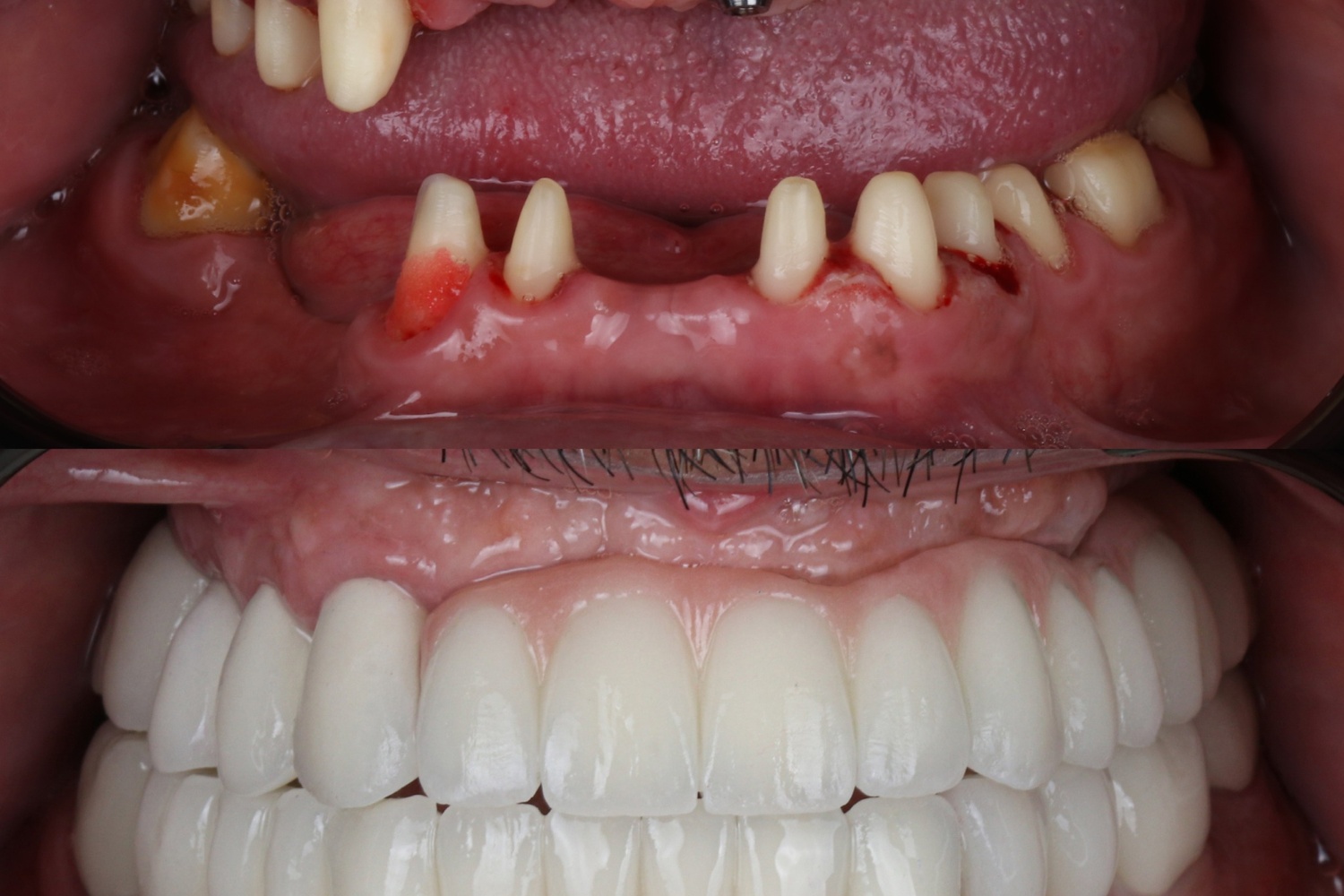
Full Mouth Dental Implants at Illuminate
Replace Multiple Missing Teeth and Restore Your Smile
Living with multiple missing teeth, loose dentures or severely damaged teeth can make everyday activities like eating and speaking more difficult. When extensive tooth loss affects your oral health and daily life, full mouth dental implants may offer a long-term restorative option.
Full mouth dental implant treatment uses strategically positioned implants to support replacement teeth across the upper jaw, lower jaw or both. Depending on the patient's bone structure, oral health and restorative needs, treatment may involve fixed implant-supported bridges or other implant-retained prostheses.
At Illuminate Multispeciality Dental & Implant Centre, full mouth rehabilitation begins with a thorough assessment of the remaining teeth, jawbone, gum tissues and bite. The goal is to determine whether implant-supported rehabilitation can restore dental function while providing a stable foundation for replacement teeth.
What Are Full Mouth Dental Implants?
Full mouth dental implants are a restorative solution for patients who have lost most or all of their teeth, or whose remaining teeth cannot be predictably preserved.
Unlike replacing every missing tooth with a separate implant, full-arch rehabilitation commonly uses several implants to support a prosthesis that replaces multiple teeth.
The implants are surgically positioned within the jawbone and serve as anchors for the replacement teeth.
Depending on the treatment plan, the final restoration may be:
Fixed Implant-Supported Bridge
A prosthesis secured to dental implants that is not removed by the patient during daily use.
Implant-Retained Overdenture
A removable denture connected to implants for improved retention and stability.
Full-Arch Implant Restoration
A fixed or removable prosthetic solution designed to replace an entire dental arch.
The number and position of implants depend on available bone, anatomical considerations, prosthetic design and the forces placed on the restoration.
Who May Need Full Mouth Implant Treatment?
Full mouth implant rehabilitation may be considered for patients with the following concerns.
Extensive Tooth Loss
Patients missing most or all teeth in one or both jaws may benefit from an implant-supported replacement.
Severely Damaged Teeth
Multiple teeth affected by extensive decay, fractures or advanced periodontal problems may require comprehensive evaluation.
Loose or Unstable Dentures
Patients struggling with denture movement while eating or speaking may be evaluated for implant-retained or fixed prostheses.
Difficulty Chewing Food
Extensive tooth loss can reduce chewing efficiency. Implant-supported replacement teeth may help improve oral function.
Failing Dental Restorations
Patients with multiple deteriorating crowns, bridges or other dental restorations may require a broader restorative assessment.
Complex Dental Rehabilitation Needs
Significant tooth wear, bite changes and multiple missing or compromised teeth may require coordinated restorative treatment.
Importantly, full mouth implants are not automatically necessary when several teeth are damaged. Teeth with a reasonable long-term prognosis should be assessed for preservation before extraction is considered.
Types of Full Mouth Implant Solutions
The most suitable implant restoration depends on how many teeth need replacement, bone availability, jaw relationships and patient preferences.
All-on-4 Dental Implants
All-on-4 is a full-arch rehabilitation concept in which four implants support a complete arch of replacement teeth.
In selected cases, the posterior implants are placed at an angle to make use of available bone and support the prosthesis.
Key Features:
- Uses four implants to support a full-arch restoration.
- May be appropriate for selected patients with extensive tooth loss.
- Can sometimes reduce the need for bone grafting.
- May allow early placement of a fixed temporary restoration when clinical conditions permit.
Not every patient is suitable for a four-implant configuration.
All-on-6 Dental Implants
All-on-6 commonly refers to a full-arch restoration supported by six dental implants.
The additional implants may provide a different distribution of support, depending on jaw anatomy and prosthetic requirements.
Key Features:
- Uses six implants to support replacement teeth across a dental arch.
- May be considered when bone conditions and restorative planning support this approach.
- Implant placement is determined by anatomical and functional considerations.
- Can support a fixed full-arch prosthesis in suitable cases.
Using six implants does not automatically make treatment superior to using four. The appropriate configuration is based on clinical assessment.
Implant-Supported Fixed Bridges
An implant-supported bridge replaces several missing teeth using implants as supporting anchors.
Full-arch fixed bridges may be screw-retained or otherwise secured using an appropriate prosthetic system.
Key Features:
- Remains fixed during routine daily activities.
- Can restore multiple missing teeth.
- Requires specialised cleaning beneath and around the restoration.
- May need professional removal for certain maintenance procedures.
Implant-Retained Overdentures
Implant-retained overdentures are removable prostheses that connect to implants for additional retention.
They may be recommended for patients seeking better denture stability without a fixed full-arch bridge.
Key Features:
- Improved retention compared with conventional removable dentures in many cases.
- Can be removed for daily cleaning.
- May require fewer implants than some fixed full-arch solutions.
- Attachment components may require periodic maintenance or replacement.
Benefits of Full Mouth Dental Implants
Improved Chewing Function
Implant-supported restorations can help patients eat a wider variety of foods compared with poorly fitting conventional dentures.
Greater Prosthetic Stability
Implants provide support that can reduce unwanted movement of replacement teeth.
Restoration of Multiple Missing Teeth
A full-arch prosthesis can replace an extensive number of missing teeth without requiring an implant for every tooth.
Improved Speech in Some Patients
Stable replacement teeth may help with speech difficulties associated with missing teeth or unstable dentures.
Support for Oral Structures
Implant-supported restorations can help restore dental arch contours and support facial appearance, although they do not prevent all age-related or bone changes.
Reduced Dependence on Conventional Dentures
Suitable patients may choose fixed implant-supported replacement teeth.
Long-Term Restorative Potential
With appropriate care and monitoring, implant-supported restorations can function for many years.
The expected benefits depend on the patient's original condition, type of prosthesis and treatment outcome.
Full Mouth Dental Implant Procedure: Step by Step
Comprehensive Dental Consultation
The dentist examines the remaining teeth, gums, bite and existing restorations. Medical history and factors affecting healing are also reviewed to determine treatment suitability.
Diagnostic Imaging and Implant Planning
Dental imaging, which may include a CBCT scan, is used to assess available bone and nearby anatomical structures. The intended prosthetic design helps guide implant number and positioning.
Preparatory Dental Treatment
Teeth that cannot be retained may require extraction. Certain patients may also need bone grafting, gum treatment or other procedures before implant placement.
Dental Implant Placement
Implants are surgically inserted into planned positions within the jawbone, generally under local anaesthesia, with additional anaesthetic or sedation options considered where appropriate and available.
Temporary Teeth and Healing
Selected patients may receive a temporary fixed restoration soon after implant placement. Others may require a healing period before the implants can safely support a prosthesis. Bone integration typically develops over several months.
Final Prosthetic Restoration
Once the implants are ready, the definitive bridge or prosthesis is fabricated and fitted. The dentist evaluates appearance, bite, speech, hygiene access and functional stability.
Maintenance and Follow-Up
Regular dental reviews help monitor implant health, surrounding tissues, prosthetic components and long-term function.
How Long Does Full Mouth Implant Treatment Take?
The duration of full mouth implant rehabilitation varies according to the patient's bone condition, number of implants, need for tooth extractions and healing response.
In some cases, temporary replacement teeth can be attached shortly after implant placement. However, this is possible only when the implants achieve adequate initial stability and the clinical conditions support immediate loading.
The permanent prosthesis is commonly fitted after a healing period of several months.
Patients requiring bone grafting, complex extractions or other preparatory procedures may need a longer treatment period.
Same-day temporary teeth do not necessarily mean that the entire treatment is completed in one day. The dentist will explain the likely sequence and timeline during the consultation.
Are Full Mouth Implants Better Than Dentures?
Both implant-supported restorations and conventional dentures can restore missing teeth. The most appropriate option depends on clinical suitability, expectations and maintenance needs.
| Feature | Full Mouth Fixed Implants | Conventional Dentures |
|---|---|---|
| Stability | Secured to implants | Supported by gums and underlying tissues |
| Removability | Not removed by the patient | Removable |
| Chewing function | Often provides greater stability | May be affected by denture movement |
| Jawbone requirements | Adequate bone or additional treatment needed | Implants not required |
| Treatment | Requires surgery | Usually non-surgical |
| Cleaning | Requires cleaning around and beneath the prosthesis | Removed for daily cleaning |
| Maintenance | Implant and prosthesis reviews | Denture adjustments and relining |
| Initial cost | Generally higher | Generally lower |
Implant-retained overdentures offer another option, combining implant support with a removable prosthesis.
Recovery After Full Mouth Dental Implant Surgery
Some swelling, tenderness, bruising and mild bleeding may occur following implant surgery. These effects generally improve as healing progresses.
During the initial recovery period, patients may be advised to:
- Eat soft foods and follow prescribed dietary restrictions.
- Take medications only as directed.
- Avoid smoking and tobacco products.
- Maintain oral hygiene according to postoperative instructions.
- Avoid placing excessive pressure on temporary restorations.
- Attend scheduled follow-up appointments.
The diet may need to remain modified for an extended period when implants are supporting an immediate temporary restoration.
Contact the treating dentist if you experience persistent bleeding, worsening swelling, fever, severe pain or unusual movement of the restoration.
Are Full Mouth Dental Implants Suitable for Everyone?
Full mouth implant treatment is not suitable for every patient.
Before recommending surgery, the dentist evaluates factors including:
- Available jawbone volume and density
- Health of the gums and oral soft tissues
- Prognosis of the remaining teeth
- General health and relevant medications
- Diabetes control and other conditions affecting healing
- Smoking and tobacco habits
- Bite forces and teeth-grinding habits
- Ability to maintain oral hygiene
- Financial and long-term maintenance considerations
Certain conditions may require additional assessment or treatment before implant placement.
The decision to extract remaining teeth should be based on their clinical prognosis and available alternatives rather than the convenience of providing a full-arch prosthesis.
How to Maintain Full Mouth Dental Implants
Full mouth implants require long-term care to protect the supporting tissues and maintain the prosthetic components.
Implants cannot develop cavities, but plaque accumulation can cause inflammation around them. If left untreated, this may progress to peri-implantitis, a condition associated with bone loss around implants.
Recommended maintenance may include:
- Brushing the restoration and accessible implant surfaces twice daily.
- Cleaning beneath fixed bridges with suitable interdental aids.
- Using floss threaders or a water flosser when recommended.
- Removing and cleaning implant overdentures as instructed.
- Attending routine professional maintenance appointments.
- Monitoring for gum bleeding, swelling, discharge or prosthetic movement.
- Avoiding habits that place excessive force on the restoration.
The dental team should provide cleaning instructions suited to the design of the final prosthesis. Maintenance visits also allow assessment of the implant components, bite and surrounding tissues.
Why Choose Illuminate for Full Mouth Dental Implants?
At Illuminate Multispeciality Dental & Implant Centre, extensive tooth replacement is approached as a complete rehabilitation process rather than simply placing implants.
With more than 3,000 implant surgeries forming part of Dr. Ankita Gada's clinical experience, implant dentistry is a significant focus of the centre's restorative services.
The treatment approach emphasises:
- Comprehensive Dental Evaluation: Assessing the prognosis of existing teeth and whether they can be retained.
- Implant and Prosthetic Planning: Evaluating implant positions in relation to the proposed replacement teeth.
- Bite and Jaw Assessment: Considering chewing forces, jaw relationships and available restorative space.
- Treatment Coordination: Planning extractions, implants, healing and prosthetic stages in the appropriate sequence.
- Functional Rehabilitation: Addressing chewing, speech, appearance and hygiene access.
- Long-Term Monitoring: Reviewing implant health and prosthetic stability after treatment.
Patients are informed about the available restorative options, expected treatment stages, potential limitations and maintenance commitments before proceeding.
Other Services
Your Best Smile Starts Here
Experience personalised dentistry where advanced expertise and comfort come together to create a smile designed around you.
Frequently Asked Questions About Full Mouth Dental Implants
Missing Most or All of Your Teeth? Explore Your Options.
Extensive tooth loss does not mean you have to continue struggling with loose dentures or difficulty chewing.
A comprehensive implant consultation can help determine whether fixed full-arch teeth, implant-retained dentures or another restorative approach is appropriate for your needs.
Visit Illuminate Multispeciality Dental & Implant Centre to understand your tooth replacement options and the steps involved in rebuilding your smile.