Dental Implants in Mumbai
Dental Implants at Illuminate
Replace Missing Teeth and Restore Your Smile
Missing teeth can affect more than appearance. They may make chewing difficult, influence speech and change how the remaining teeth function.
Dental implants offer a fixed, long-term tooth replacement option for suitable patients. They act as artificial tooth roots placed within the jawbone to support crowns, bridges or selected full-arch restorations.
At Illuminate, dental implant treatment begins with a thorough assessment of your teeth, gums, bone structure and bite. Each stage is planned to help achieve a functional restoration that fits your oral health needs.
What Are Dental Implants?
A dental implant is typically a titanium or titanium-alloy fixture surgically placed in the jawbone to support a replacement tooth or dental prosthesis.
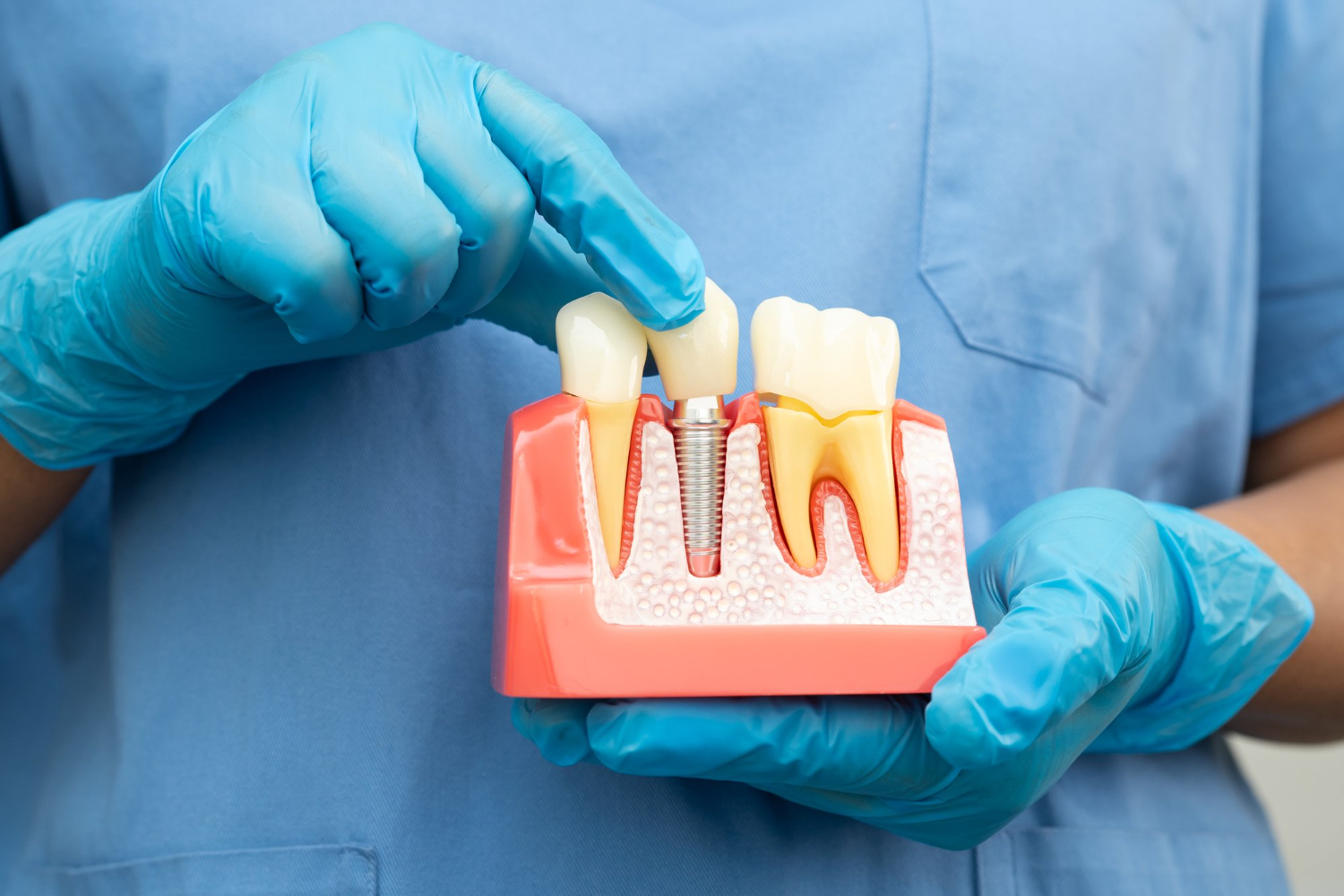
A common single-tooth implant restoration consists of three components:
Implant fixture
Positioned within the jawbone to provide support.
Abutment
Connects the implant to the replacement tooth.
Dental crown
Replaces the visible part of the missing tooth.
Over time, the implant may integrate with the surrounding bone through a biological process called osseointegration, creating a stable foundation for the restoration.
When Are Dental Implants Recommended?
Dental implants may be considered when you have:
- A single missing tooth requiring replacement
- Multiple missing teeth affecting chewing
- Gaps where an implant-supported bridge may be suitable
- Extensive tooth loss requiring full-arch rehabilitation
- Loose or unstable dentures that may benefit from implant support
Implants can also be evaluated when a tooth cannot be retained due to extensive damage, although preserving a viable natural tooth remains an important treatment priority.
Benefits of Dental Implants
Improved Chewing Ability
Implant-supported restorations can help patients chew a wider range of foods more effectively.
Support for Jawbone Health
Dental implants transfer functional forces to the jawbone and may help limit bone loss associated with missing teeth, although bone changes can still occur.
Preservation of Adjacent Teeth
Unlike conventional tooth-supported bridges, a single implant usually does not require preparation of healthy neighbouring teeth.
Stable Tooth Replacement
Implant-supported crowns and bridges remain fixed in place, while certain implant-retained dentures offer improved stability.
Long-Term Restorative Option
With appropriate maintenance and regular dental reviews, implants can function for many years, although repairs or replacement may be necessary.
Dental Implant Procedure: Step by Step
Consultation and Oral Assessment
The dentist examines your teeth, gums, bite and medical history to determine whether dental implants may be appropriate.
Diagnostic Imaging and Planning
Dental X-rays or a CBCT scan may be recommended to assess bone volume, anatomical structures and the proposed implant position.
Implant Placement
The implant is surgically positioned in the jawbone, generally under local anaesthesia. Additional procedures, such as bone grafting, may be necessary in selected cases.
Healing and Osseointegration
The surrounding bone gradually integrates with the implant. This process commonly takes several months, depending on individual healing and treatment requirements.
Final Tooth Restoration
Once the implant is ready, the dentist attaches the planned crown, bridge or prosthesis, checking fit, appearance and bite.
Follow-Up and Maintenance
Regular appointments help monitor the implant, surrounding gums, bone support and condition of the final restoration.
Recovery After Dental Implant Surgery
Mild swelling, tenderness and minor bleeding can occur during the first few days after implant placement. Your dentist may recommend dietary adjustments, oral hygiene instructions and medications where appropriate.
During the initial recovery period:
- Follow the prescribed postoperative instructions.
- Eat soft foods as advised.
- Maintain oral hygiene without disturbing the surgical site.
- Avoid smoking and tobacco use.
- Attend scheduled review appointments.
Healing time varies, and the final restoration may be placed only after adequate implant stability and tissue healing have been confirmed.
Persistent or worsening pain, fever, excessive bleeding or increasing swelling should be assessed promptly by the treating dentist.
Who Is a Suitable Candidate for Dental Implants?
Many adults with missing teeth may be considered for implants, but suitability depends on individual clinical findings.
Important factors include adequate bone support, healthy surrounding tissues, medical history, smoking habits and the ability to maintain oral hygiene.
Patients with periodontal disease, uncontrolled medical conditions or insufficient bone may need additional treatment or evaluation before implant placement.
How to Care for Your Dental Implants
Dental implants cannot develop tooth decay, but inflammation and infection can develop in the surrounding tissues.
Daily care should include brushing twice a day, cleaning around implant restorations with suitable interdental aids and attending regular professional examinations.
Your dentist may also assess for excessive biting forces, implant mobility and signs of peri-implant disease.
Why Consider Illuminate for Dental Implants?
With more than 3,000 implant surgeries forming part of Dr. Ankita Gada's clinical experience, implant dentistry is an important area of focus at Illuminate.
The clinical approach includes comprehensive oral assessment, evaluation of anatomical and restorative requirements, planning for bite function and ongoing maintenance.
From replacing one missing tooth to assessing complex restorative needs, the objective is to recommend an appropriate treatment pathway based on the patient's clinical findings.